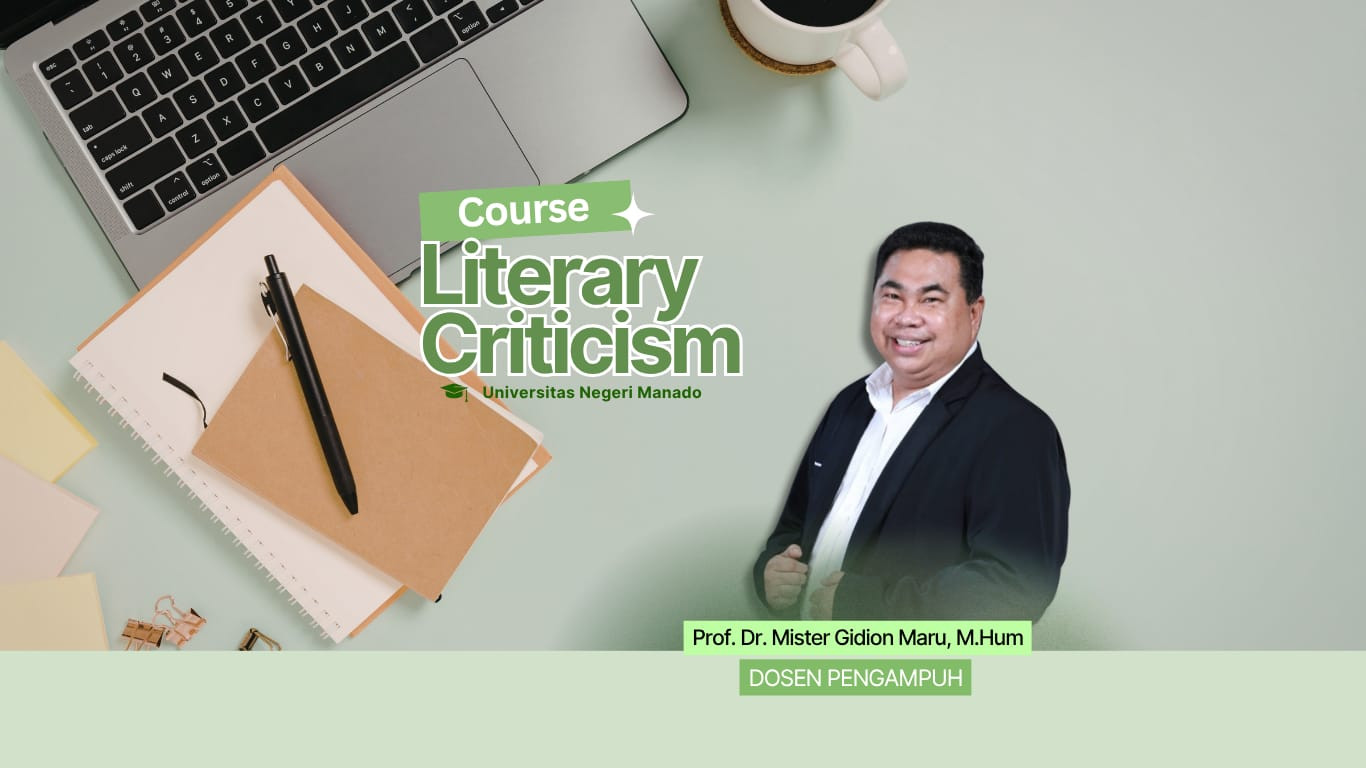
This course provides students with a comprehensive understanding of
literary criticism, its history, functions, and key principles. It explores major
critical approaches, including Formalism, Structuralism, Semiotics,
Psychoanalysis, Marxism, Gender and Feminism, Reader-Response, and
Moral-Philosophical perspectives. Students will analyze, interpret, and evaluate literary texts through various frameworks, comparing theoretical
strengths and limitations. The learning process involves lectures,
discussions, and practical applications of criticism. By the end of the course,
students will be able to write well-structured critical reviews and apply
diverse theories to advanced literary case studies, demonstrating a
nuanced understanding of literature’s cultural and ideological dimensions
literary criticism, its history, functions, and key principles. It explores major
critical approaches, including Formalism, Structuralism, Semiotics,
Psychoanalysis, Marxism, Gender and Feminism, Reader-Response, and
Moral-Philosophical perspectives. Students will analyze, interpret, and evaluate literary texts through various frameworks, comparing theoretical
strengths and limitations. The learning process involves lectures,
discussions, and practical applications of criticism. By the end of the course,
students will be able to write well-structured critical reviews and apply
diverse theories to advanced literary case studies, demonstrating a
nuanced understanding of literature’s cultural and ideological dimensions
- Teacher: Muhammad Ilham Ali
- Teacher: Sabrina Wardatul Jannah Husain
- Teacher: Mister Gidion Maru
- Teacher: Olga Rorintulus